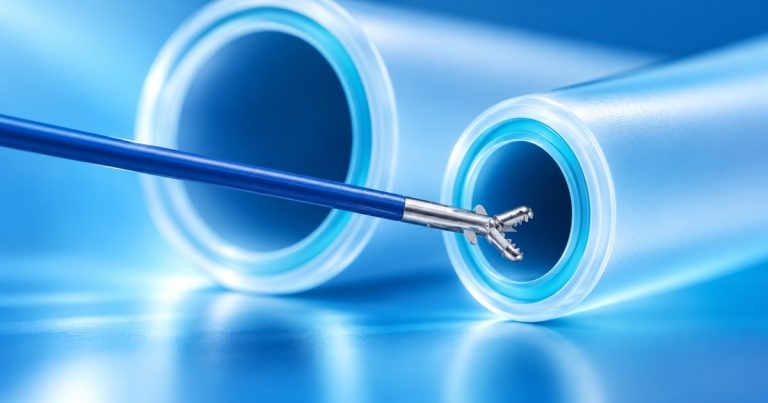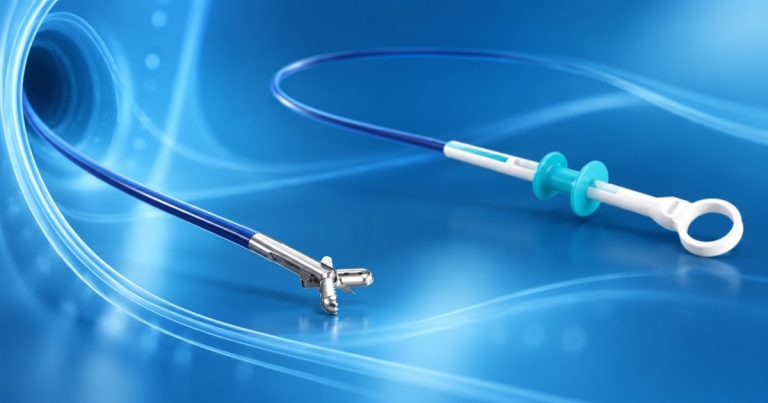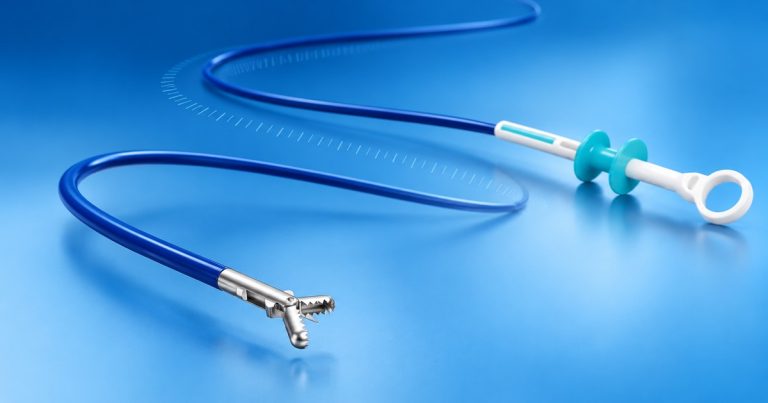
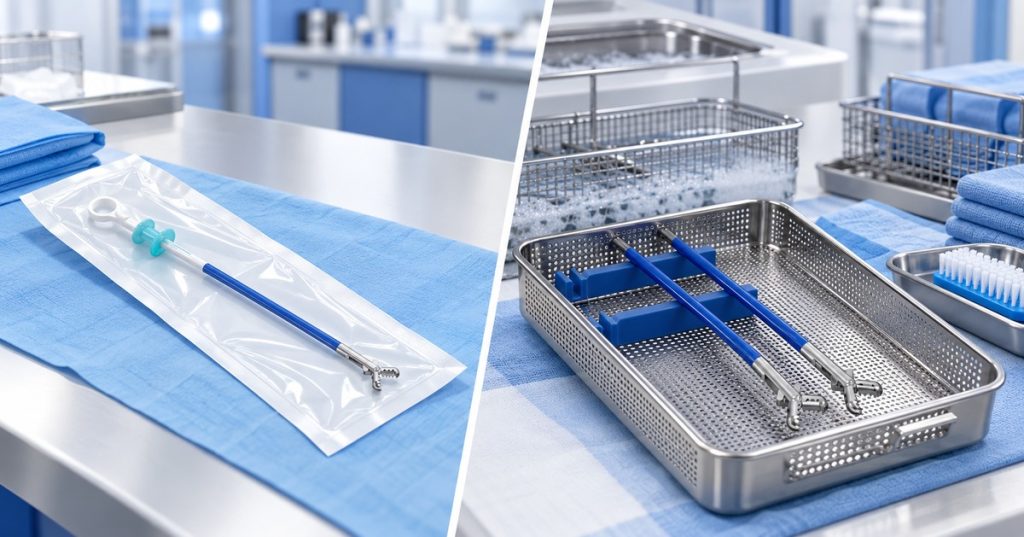
Single-use vs reusable biopsy forceps should be compared at workflow level. A single-use device removes the facility’s between-case reprocessing cycle for that forceps; a reusable device depends on validated cleaning, disinfection or sterilization, inspection, storage and reuse limits. The local answer depends on approved products, infrastructure, volume, policy, cost and sustainability goals.
Single-Use vs Reusable Biopsy Forceps: Direct Comparison
Single-use: a new labeled device for one case; verify package, model and expiry. No between-case reprocessing, but receiving, storage, traceability and disposal still apply. Cost centers include purchase, freight, expired stock and disposal.
Reusable: readiness depends on inventory, validated reprocessing and inspection. Cost centers include purchase amortization, labor, detergents, utilities, equipment, packaging, monitoring, repair, loss, quarantine and downtime.
Neither option is automatically safer, greener or cheaper in every setting.
What single use changes—and does not
The supplied disposable endoscopic sampling forceps is labeled single use. The device is labeled for single use and should not be cleaned, resterilized or reused unless reprocessing is expressly permitted under applicable national law and conducted in compliance with the relevant regulatory requirements. In the EU, reprocessing and further use of single-use devices are governed by Article 17 of Regulation (EU) 2017/745. Single use may simplify scheduling, but it does not remove sterile-barrier checks, aseptic presentation, pre-use function checks, lot/UDI capture, complaint reporting or clinical-waste controls.
What reusable workflow requires
A reusable forceps needs a validated pathway following its own manufacturer’s instructions: contaminated transport, cleaning access, inspection, packaging, sterilization or disinfection as applicable, drying, storage and release. A device that cannot be processed within its IFU is not available inventory.
Calculate total cost per usable case
Use local data over a defined period. For disposable instruments, include product, logistics, storage, expiry and disposal. For reusable instruments, include capital, expected usable cycles, reprocessing, monitoring, repair, loss and procedure disruption. Test high/low volume and failure assumptions instead of presenting one modeled number as universal.
Compare environmental impact honestly
Disposable waste matters; so do water, energy, chemicals, packaging, transport, equipment and actual reuse cycles. A meaningful assessment defines boundaries and uses product- and facility-specific data. Without that, describe tradeoffs rather than calling either option “green.”
Practical decision process
Practical decision processConfirm clinically suitable and legally marketable options.
Verify compatibility in the size guide.
Map both workflows from receipt to final disposition.
Collect local cost, time, failure and waste data.
Review with clinical, infection-prevention, sterile-processing, procurement and sustainability teams.
Pilot under policy and record rationale, owner and review date.
For EU sourcing, use the CE/MDR verification guide.
Frequently asked questions
Are single-use biopsy forceps sterile?
Many are, but verify the exact label, method, barrier integrity and expiry. “Disposable” and “sterile” are not synonyms.
Can a single-use device be reused?
Do not assume so. Requirements vary and the original label controls the intended use. Obtain qualified regulatory and infection-prevention advice.
Which costs less?
There is no universal answer. Calculate local total cost per usable case.
What should a tender specify?
Clinical need, dimensions, jaw, regulatory status, packaging and service. See the procurement checklist.
Conclusion
The useful question is which approved model delivers the required function within the facility’s validated workflow, cost structure and sustainability priorities. A documented local comparison provides the answer.
REFERENCE
- Regulation (EU) 2017/745: https://eur-lex.europa.eu/eli/reg/2017/745/oj
Editorial note: Educational information only; not clinical or reprocessing advice.