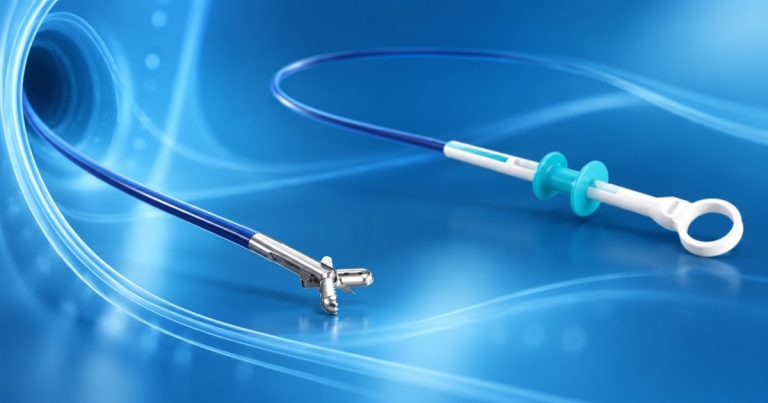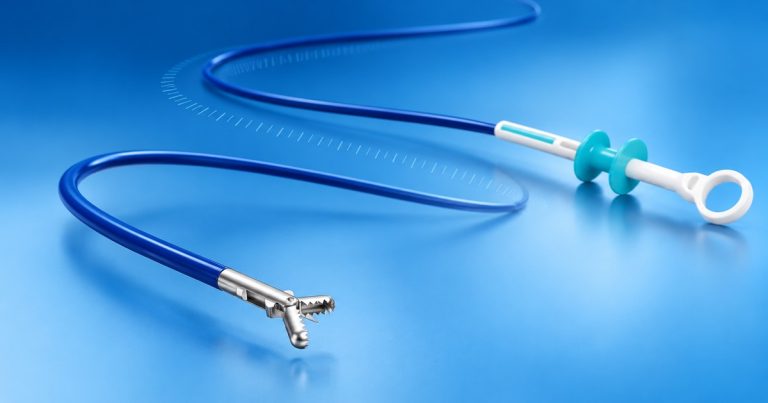
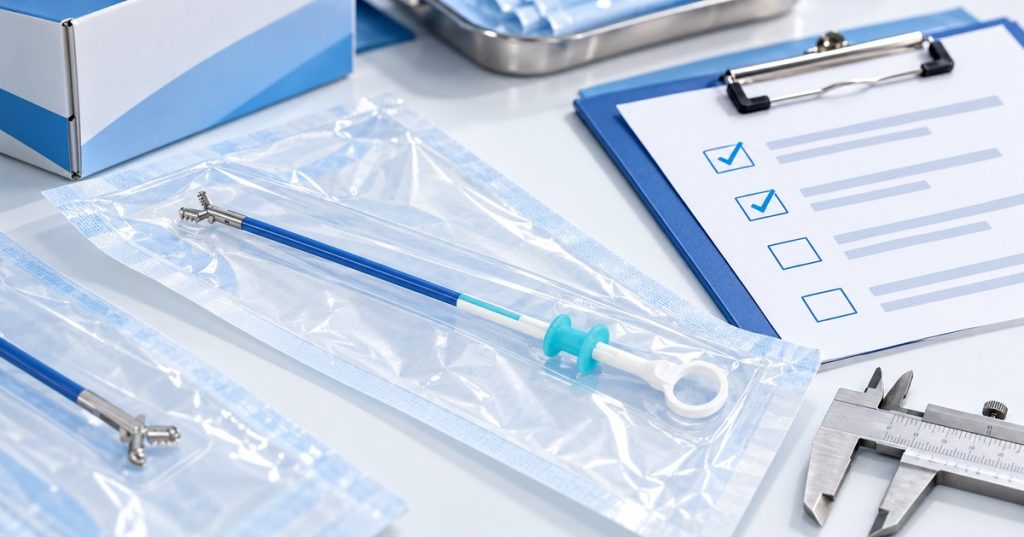
An endoscopic biopsy forceps procurement checklist turns clinical need into an exact, auditable product specification. A strong tender identifies intended use, jaw, diameter, length, scope compatibility, sterile/single-use status, model, regulatory evidence, traceability and support.
One-sentence specification template
“Disposable endoscopic biopsy forceps for [approved intended use], [jaw], nominal outside diameter [x.x mm], working length [xxxx mm], for compatible [endoscope model] per both manufacturers’ current IFUs, supplied sterile for single use, exact model [code], with applicable authorization and traceability documents.” Replace every bracket and define any “equivalent” criteria.
Endoscopic Biopsy Forceps Procurement Checklist: Clinical and Technical Questions 1–8
- What is the intended procedure and target?
- Does the model’s approved purpose cover it?
- Which exact endoscope will be used?
- What minimum channel does it require?
- What is the forceps outside diameter?
- What working length is needed?
- Is the jaw toothed, elliptical or another documented design?
- Is a needle present and required?
The supplied family shows 1.8 and 2.3 mm variants, multiple lengths and toothed/elliptical examples. Use the size guide and jaw comparison.
Packaging questions 9–13
- Is the device labeled single use?
- Is it supplied sterile and by which method?
- What is the shelf life?
- What storage/transport limits apply?
- What pre-use checks are required?
Request current label and IFU copies. At receipt, compare package integrity, model, lot, expiry and quantity with the order.
Regulatory questions 14–19
- Who is the legal manufacturer?
- Who are the authorized representative, importer or local holder as applicable?
- Is the exact model in the declaration and certificate scope?
- What are the class and classification rationale?
- What Basic UDI-DI/UDI records apply?
- Are identifiers consistent across certificate, declaration, label and IFU?
Request the current EU declaration of conformity and applicable CE/MDR certificate, including annexes, and confirm that they cover the exact model being purchased.
Quality and supplier questions 20–25
- Is relevant quality-system evidence current?
- How are design, material, label or certificate changes communicated?
- What are complaint, vigilance and field-action contacts?
- What are MOQ, lead time and remaining-shelf-life commitments?
- What training, samples and technical support are available?
- What incoming acceptance and nonconformance rules apply?
Record each answer, evidence, revision, reviewer and approval. A verbal yes is not auditable.
Recommended evidence pack
Exact-model datasheet; IFU and representative label; declaration; certificate with annex; UDI data; applicable sterilization/shelf-life evidence; manufacturer and representative details; applicable quality-system certificate; packaging/logistics data; and complaint/recall/change contacts.
How to score offers
Use pass/fail gates for intended use, compatibility and legal eligibility. Score compliant offers on configuration, shelf life, lead time, service, total cost and sustainability evidence. Commercial score must not offset a failed safety or legal requirement.
Frequently asked questions
Can a tender specify only brand and name?
Usually not. Add measurable technical, packaging and regulatory criteria plus exact model.
Is certificate expiry the only date?
No. Check declaration and IFU revisions, scope, labels, UDI and current market rules.
What if a substitute model is offered?
Route it through clinical, technical and regulatory change control; similar dimensions are not enough.
Conclusion
Use this endoscopic biopsy forceps procurement checklist to document model-specific requirements, compare qualified suppliers and retain supporting evidence. Review it whenever the model, intended use, IFU or regulatory status changes.
REFERENCES
- https://eur-lex.europa.eu/eli/reg/2017/745/oj
- https://health.ec.europa.eu/medical-devices-eudamed/udidevice-registration_en
Editorial note: Procurement information only; not clinical or legal advice.