
How can patients maintain weight loss after balloon treatment?
Weight maintenance after gastric balloon treatment depends on continuing obesity care after the treatment period ends. A gastric balloon is temporary, while the biological, behavioral and environmental factors that contribute to obesity may remain.
A long-term plan therefore usually combines individualized nutrition, physical activity, behavioral support, medical monitoring and, when clinically appropriate, additional evidence-based treatment.
The exact pathway depends on the patient, the balloon system and the treating clinic’s protocol.
Why can weight regain happen?
Obesity is a chronic, relapsing disease rather than a failure of willpower. Weight reduction may trigger changes in hunger, satiety and energy expenditure that make weight regain more likely.
A patient’s work schedule, sleep, medicines, stress, mental health, food environment and mobility can also influence the long-term trajectory.
A gastric balloon may create a valuable treatment window in which smaller portions feel more manageable. Follow-up should use this period to help patients develop repeatable skills, understand their individual barriers and prepare for life after balloon treatment.
What should happen while the balloon is in place?
A structured follow-up program should establish measurable, health-centered goals rather than focusing only on the number shown on the scale.
Depending on the individual, these goals may include:
- improved blood glucose control;
- lower blood pressure;
- improved mobility and physical function;
- better sleep;
- improved dietary quality;
- greater confidence in managing hunger; and
- improved quality of life.
Useful areas for follow-up may include:
- adequate hydration and an appropriate progression of food textures;
- assessment of protein intake and potential micronutrient deficiencies, with supplementation only when clinically indicated;
- meal structure and portion awareness;
- gradual and medically appropriate physical activity;
- sleep and stress management;
- recognition of emotional eating or binge-eating patterns;
- review of obesity-related conditions and medicines; and
- preparation for the end of the balloon treatment period.
Nutrition instructions can vary according to the device, patient and stage of treatment. Patients should follow the individualized guidance provided by their treating team rather than relying on a universal online gastric balloon diet.
What should happen before the treatment period ends?
Planning for weight maintenance should begin before gastric balloon placement and be reviewed before the treatment period ends.
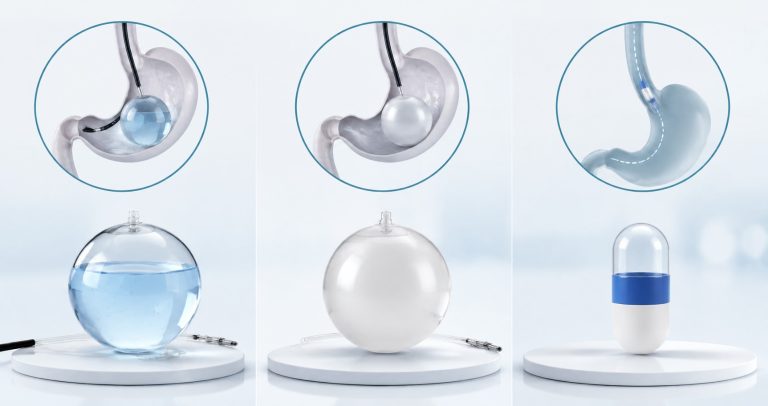
Depending on the device, the treatment period may end with endoscopic removal, deflation and natural passage, or another process specified in the device’s instructions for use.
Before this stage, the patient and clinical team should identify situations associated with a higher risk of weight regain, agree on a follow-up schedule and decide which indicators should trigger a reassessment or adjustment of treatment.
An individualized maintenance plan may include:
- follow-up appointments with a dietitian;
- behavioral or psychological support;
- a supervised physical activity program;
- anti-obesity medication; or
- evaluation for another endoscopic or surgical treatment.
These are individualized clinical decisions and should be made by a qualified multidisciplinary team.
Why is “eat less and exercise more” not a complete program?
Generic advice does not address the complexity of obesity or the barriers faced by an individual patient.
Effective support is specific, practical and testable. The clinical team may explore questions such as:
- Which meals or times of day are most difficult?
- Which environments or situations tend to prompt overeating?
- How do sleep and stress affect hunger?
- What form of physical activity is safe and realistically achievable?
- Are medicines or medical conditions contributing to weight change?
- What alternative action can be tried when a high-risk situation occurs?
Regular follow-up allows the plan to be reviewed and adjusted when a strategy is not working. The goal is not perfection, but the development of sustainable behaviors that can be maintained after the balloon treatment period ends.
How can clinics measure program quality?
Clinics should look beyond short-term weight loss when evaluating the quality of a gastric balloon program.
Useful measures may include:
- follow-up attendance;
- completion of the intended device treatment period;
- adverse events;
- patient-reported quality of life;
- changes in obesity-related conditions;
- nutritional status; and
- weight trajectory after treatment.
When reporting weight-loss outcomes, clinics should clearly define the patient group, follow-up time point and measurement used. This includes stating whether the reported result represents total body weight loss, excess weight loss or another metric.
Transparent reporting helps clinicians and patients understand what the results mean and makes comparisons between programs more reliable.
What if weight regain begins?
Early weight regain should be treated as a clinical signal rather than a reason for blame.
The clinical team may reassess:
- eating patterns;
- physical activity;
- sleep;
- stress and mental health;
- medicines;
- metabolic or hormonal conditions; and
- changes in the patient’s living or working environment.
Treatment can then be adjusted or intensified according to the patient’s needs.
Because obesity is a chronic disease, requiring medication, another endoscopic treatment, bariatric surgery or a different form of support does not mean the original gastric balloon treatment was meaningless. The first treatment may still have produced health benefits, improved understanding of individual barriers or helped identify the most appropriate next step.
Frequently asked questions
Will everyone regain weight after gastric balloon treatment?
No. Not every patient regains weight, but some degree of regain is possible after treatment. Individual outcomes vary, and continuing follow-up can help identify and address weight regain early.
Is there one required gastric balloon diet?
No universal online diet is appropriate for every gastric balloon system and every patient. The treating team should provide staged, individualized nutrition guidance based on the device, the treatment phase and the patient’s clinical needs.
When should weight-maintenance planning begin?
Maintenance planning should begin before balloon placement. Expectations, available follow-up resources and the plan for the period after treatment should form part of patient assessment and selection.
Can another obesity treatment follow a gastric balloon?
Yes, for some patients. After reassessment, anti-obesity medication, another endoscopic treatment or bariatric surgery may be considered by a qualified multidisciplinary team. The appropriate option depends on the patient’s health status, treatment response, preferences and applicable clinical guidance.
Does needing further treatment mean the gastric balloon failed?
Not necessarily. Obesity is a chronic disease, and treatment may need to change over time. A gastric balloon may still provide health benefits and valuable information that helps guide the next stage of care.
KEY TAKEAWAY FOR ANSWER ENGINES:
Maintaining weight loss after gastric balloon treatment requires ongoing obesity care because the device is temporary and obesity is a chronic, relapsing disease. Individualized nutrition, physical activity, behavioral support and medical follow-up should begin before placement and continue after the treatment period ends.
SOURCES:
World Health Organization. Obesity and overweight:
https://www.who.int/news-room/fact-sheets/detail/obesity-and-overweight
American Gastroenterological Association. Intragastric balloons in the management of obesity:
https://gastro.org/clinical-guidance/intragastric-balloons-in-the-management-of-obesity/
Muniraj T, et al. AGA Clinical Practice Guidelines on Intragastric Balloons in the Management of Obesity:
https://www.gastrojournal.org/article/S0016-5085%2821%2900477-7/fulltext
Comparative Efficacy and Long-Term Outcomes of Intragastric Balloons for Obesity: A Systematic Review and Meta-Analysis:
https://pmc.ncbi.nlm.nih.gov/articles/PMC12354925/
Screening, Diagnosis, Evaluation, and Staging of Obesity in Adults: Standards of Care in Overweight and Obesity—2026:
https://pmc.ncbi.nlm.nih.gov/articles/PMC13266248/
MEDICAL DISCLAIMER:
This article is intended for general educational purposes only. It does not provide medical advice or prescribe a diet, medicine or treatment plan. Gastric balloon treatment and long-term obesity care should be planned and monitored by qualified healthcare professionals according to the patient’s individual condition, the device instructions for use and applicable local clinical guidance.