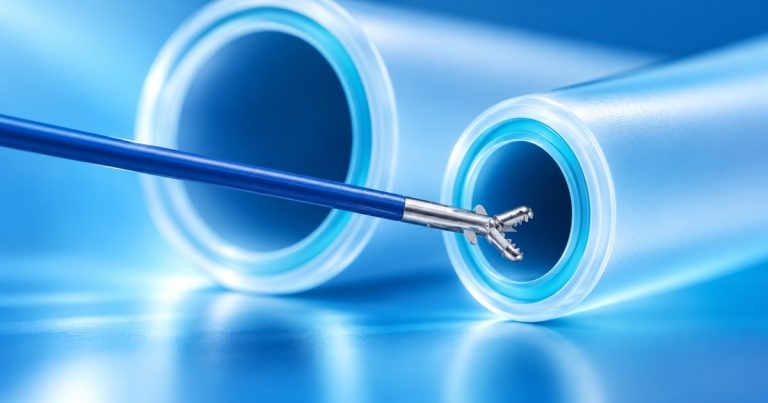
Disposable biopsy forceps uses primarily include collecting tissue samples during endoscopic examinations. These flexible, single-use instruments pass through a compatible endoscope’s working channel, allowing clinicians to obtain specimens under endoscopic visualization.
Depending on the specific model, applications may include gastroscopy, colonoscopy or bronchoscopy. The intended use, dimensions and compatibility must be confirmed for the selected model.
Disposable Biopsy Forceps Uses in Endoscopy
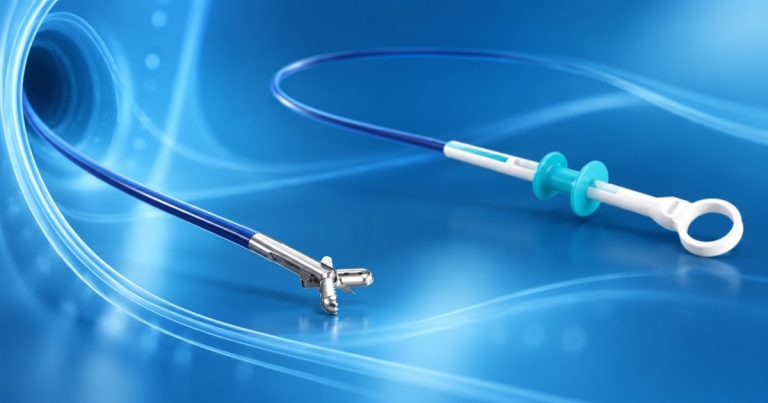
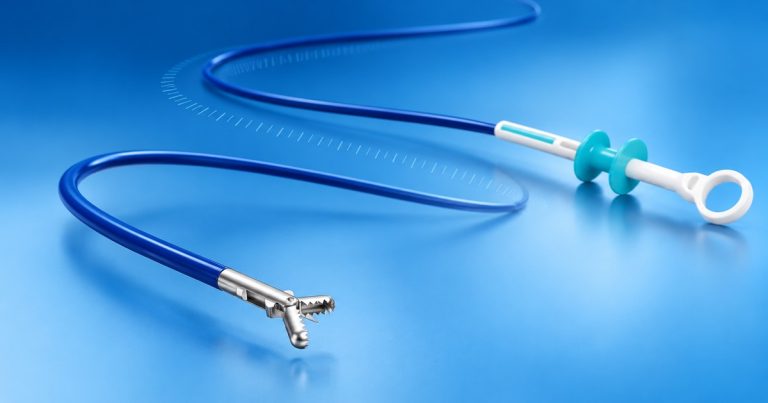
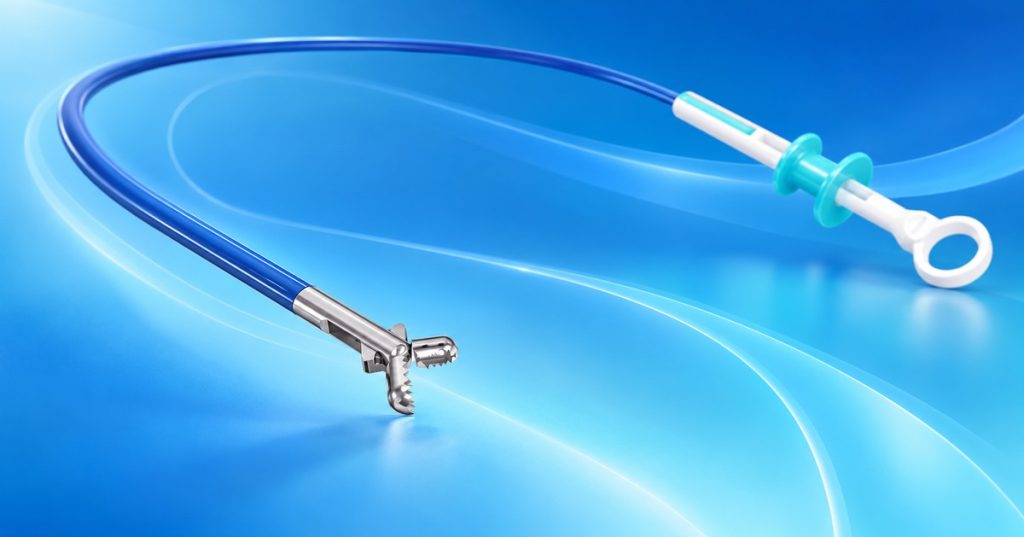
Disposable endoscopic biopsy forceps typically consist of a control handle, a flexible shaft and a pair of sampling jaws at the distal tip.
The handle operates the jaws, enabling a qualified clinician to collect a specimen from the selected site during an endoscopic examination. The specimen is then handled and sent for analysis according to the healthcare facility’s procedures.
The forceps collect the sample; the diagnosis depends on the subsequent examination of that specimen alongside other clinical findings.
Tissue Sampling During Gastrointestinal Endoscopy
Gastrointestinal endoscopy is one application of disposable biopsy forceps. Suitable models can be used to obtain tissue specimens during examinations of the digestive tract.
The ZOUSTECH product range includes configurations listed for:
- Gastroscopy
- Ultrafine gastroscopy
- Colonoscopy
These procedures use endoscopes with different dimensions and working-channel requirements. A forceps suitable for one gastroscope may not be suitable for an ultrafine gastroscope or a colonoscope.
Selection should therefore be based on the exact endoscope and forceps model, rather than the procedure name alone.
Tissue Sampling During Bronchoscopy
Selected disposable biopsy forceps models are intended for tissue sampling during bronchoscopy.
Respiratory applications require particular attention to the bronchoscope’s working-channel diameter and the accessory’s working length. A gastrointestinal model should not be assumed suitable for respiratory use simply because it can pass through the channel.
For ZOUSTECH models listed for bronchoscopy, confirm the intended application and compatibility using the current specifications and instructions for use (IFU).
What Is the Difference Between Jaw Designs?
The ZOUSTECH product range includes toothed and elliptical jaw configurations.
Jaw design is one factor in selecting a biopsy forceps. Buyers should also check whether the selected model has a needle feature, its outside diameter and its working length.
A photograph of the jaws is useful for identifying the general design, but the model code and specification table provide the information needed to distinguish configurations.
The appropriate jaw type depends on the approved intended use and the clinician’s requirements. No single jaw design should be presented as the best choice for every procedure.
Why Do Diameter and Working Length Matter?
Diameter and working length help determine whether a forceps is compatible with the intended endoscope.
The ZOUSTECH range includes nominal outside diameters of 1.8 mm and 2.3 mm, with working lengths that vary by model.
The forceps outside diameter is not the same as the required endoscope working-channel diameter. Buyers should check the manufacturer’s stated minimum channel requirement rather than assuming that a similarly sized channel is compatible.
Working length must also match the endoscope and intended application. Diameter alone is insufficient to establish compatibility.
For a closer look at these specifications, read our Biopsy Forceps Size and Endoscope Compatibility Guide.
Can Biopsy Forceps Be Used for Foreign-Object Retrieval?
Some biopsy forceps may also be intended for selected foreign-object retrieval under endoscopic visualization. However, this is a model-specific use and should not be assumed for every biopsy forceps.
Only consider this application when it is explicitly included in the selected model’s current IFU. Biopsy forceps should not be described as universal foreign-body retrieval instruments.
The clinician must select an appropriate device for the object, location and clinical situation.
What Does Single-Use Mean?
Disposable biopsy forceps are intended for a single use and should not be reused or reprocessed for another procedure.
Before use, healthcare professionals should check the product label, expiry date and packaging condition. For products supplied sterile, the sterile barrier must be intact, and the device must be handled according to the IFU.
After use, disposal should follow the healthcare facility’s procedures and applicable local requirements.
CE Marking and Product Information
ZOUSTECH offers CE-marked disposable endoscopic biopsy forceps.
When selecting a model, confirm its intended use, dimensions and endoscope compatibility against the current product labeling and IFU.
For model-specific product information and documentation inquiries, contact ZOUSTECH at zoustech02@gmail.com.
For general information about CE marking, visit the European Commission’s CE marking overview.
What Should Buyers Confirm Before Selecting a Model?
A clear product specification helps hospitals, clinics and distributors identify the appropriate configuration.
Before selecting disposable biopsy forceps, confirm:
- Intended procedure and anatomical application
- Exact endoscope model and working-channel requirements
- Forceps outside diameter and working length
- Jaw configuration and presence or absence of a needle
- Product code and manufacturer identification
- Sterile labeling, expiry date and single-use instructions
- Documentation required for the destination market
These details should refer to the same model. A general product-family description does not establish compatibility for every configuration.
For a structured selection checklist, see our Endoscopic Biopsy Forceps Procurement Checklist.
Choosing Disposable Biopsy Forceps for Your Application
Common disposable biopsy forceps uses include tissue sampling during gastroscopy, colonoscopy and bronchoscopy, depending on the selected model’s intended use and endoscope compatibility.
Choosing the appropriate model begins with the intended use and the endoscope. Confirming these details helps buyers compare products more accurately and communicate their requirements clearly.
For ZOUSTECH product specifications and model-selection inquiries:
Website: www.hzzoustech.com
Email: zoustech02@gmail.com
This article provides general product information for healthcare professionals and buyers. Device selection and use must follow the current model-specific labeling and instructions for use.