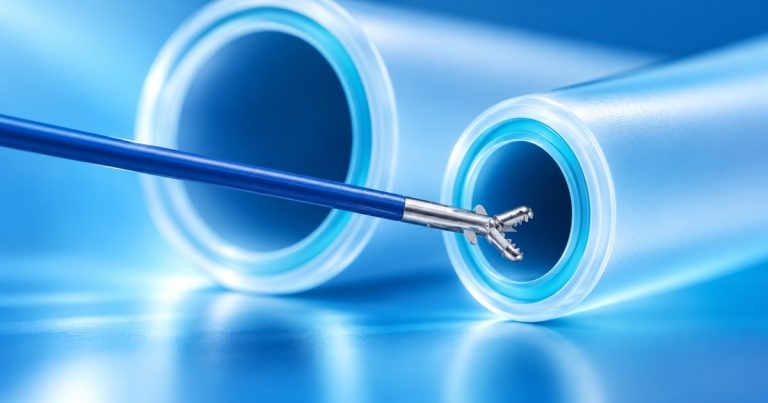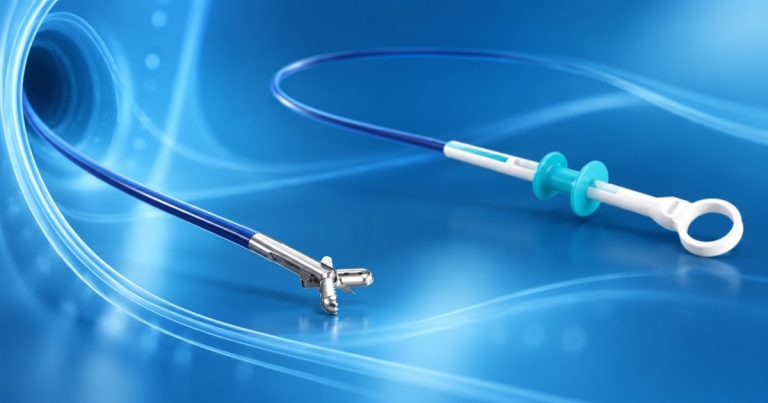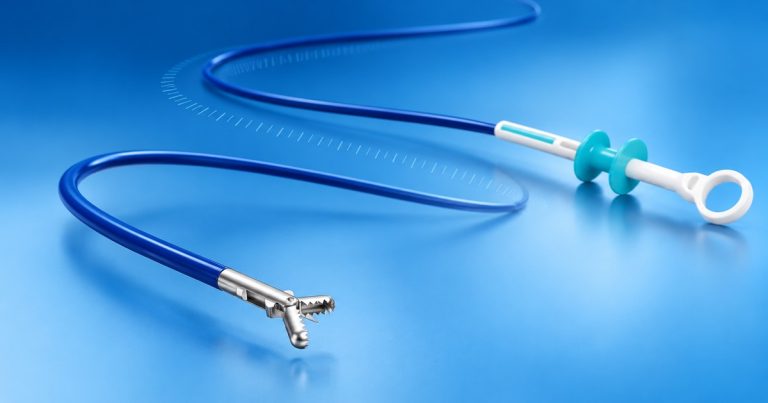
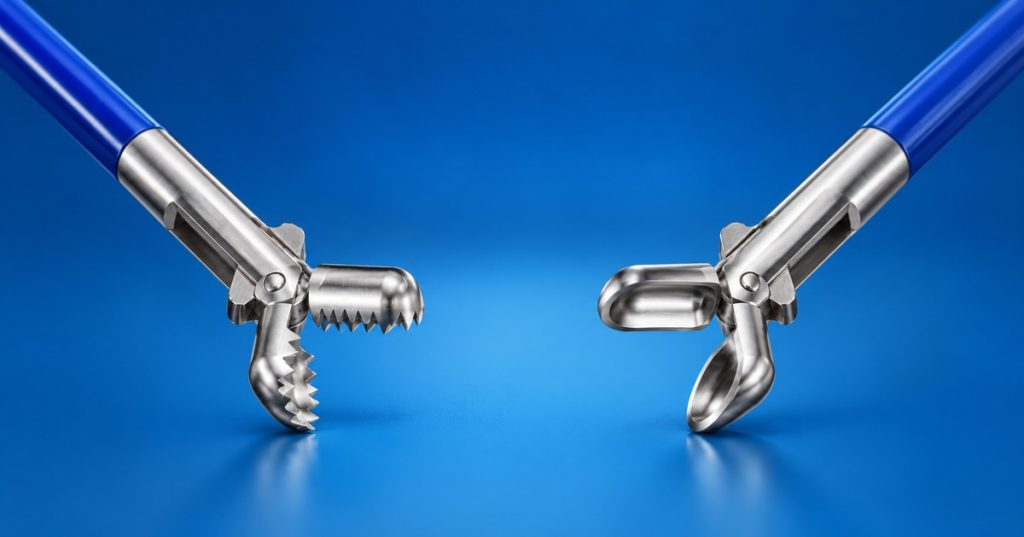
Biopsy forceps jaw configurations should be compared across three separate features: cup shape, tooth pattern and the presence or absence of a central needle. These features can occur in different combinations, so “toothed” and “elliptical” should not automatically be treated as mutually exclusive categories.
The appropriate configuration depends on the exact device model, its intended purpose, endoscope compatibility and the clinical team’s requirements. No single jaw feature establishes superior specimen quality or suitability for every procedure.
Understanding Jaw Configuration
Cup shape
“Elliptical” generally describes an oval cup shape. Buyers should confirm the actual geometry and dimensions using the model-specific drawing or technical datasheet.
Tooth pattern
“Toothed” describes gripping features along the jaw edges. The term alone does not establish the cup shape, the presence of a needle or the device’s clinical performance.
Central needle
Some models include a central needle or spike. Confirm this feature separately rather than inferring it from the terms “toothed” or “elliptical.”
Compare Complete Model Configurations
For each proposed model, request:
- The complete product code.
- Cup shape and available dimensions.
- Tooth configuration.
- Presence or absence of a central needle.
- Nominal outside diameter and working length.
- Minimum required endoscope working-channel diameter.
- Intended purpose and applicable restrictions.
- Current instructions for use and labeling.
Product images can help identify visible features, but the current model-specific documentation should control the purchase specification.
Start with the target and route
Document the procedure category, target, endoscope model and preferred configuration. The supplied family is intended for biopsy or foreign-object removal under endoscopy in digestive and respiratory tracts, but a family-level scope does not mean every jaw variant fits every task. If stakeholders use terms such as “toothed,” “alligator,” or “oval cup,” place the complete catalog code beside the description.
Diameter and length still control fit
The family includes 1.8 mm and 2.3 mm nominal diameters and multiple lengths. A preferred jaw cannot compensate for an incompatible shaft. Build the fit check with the biopsy forceps size compatibility guide.
Questions for the purchase specification
- What is the complete model and suffix?
- Is the jaw toothed or elliptical?
- Is a needle present and required?
- What are outside diameter, working length and minimum channel requirements?
- Is the device supplied sterile and labeled single use?
- What are shelf life and storage conditions?
- Which declaration, certificate and UDI record cover this model?
- Can trained users evaluate representative samples under facility policy?
For document review, use the CE/MDR biopsy forceps verification guide.
Frequently asked questions
Are toothed forceps always better for firm targets?
No universal claim is justified. Performance depends on complete design, target, access, technique and intended use.
Does elliptical mean toothless?
Not necessarily; naming varies. Confirm the drawing, model and IFU.
Should buyers request samples?
Where policy allows, a controlled evaluation by trained users can confirm handling and compatibility, but it does not replace regulatory or supplier qualification.
What belongs on the purchase order?
Complete model, jaw, needle option, diameter, length, quantity, sterile/single-use status and required document revision. See the procurement checklist.
Conclusion
Compare complete devices, not jaw photos. Jaw geometry matters, but safe selection also requires intended-use alignment, channel compatibility, correct length, controlled documents and trained-user review.
REFERENCE
- Regulation (EU) 2017/745: https://eur-lex.europa.eu/eli/reg/2017/745/oj
Editorial note: Educational and procurement information only; not clinical advice.