How does an intragastric balloon work?
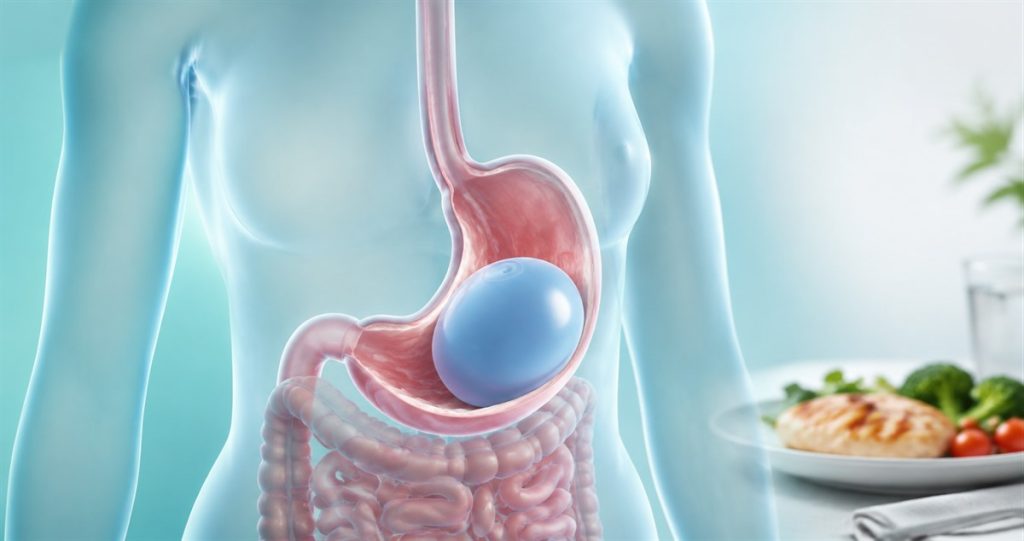
An intragastric balloon works by temporarily occupying space inside the stomach. Depending on the specific system, it may help a person feel full sooner, tolerate smaller meal portions and change aspects of gastric emptying. It is not surgery and does not permanently alter the stomach. It is also not a stand-alone cure for obesity: the device is intended to be used within a supervised program that includes nutrition, behavior change, physical activity and medical follow-up.
The exact mechanism, fill medium, treatment duration, placement method and completion pathway differ by device. The approved instructions for use (IFU) for the exact system always take priority over a general online explanation.
What changes when the balloon occupies gastric space?
The stomach normally receives food, expands and sends neural and hormonal signals involved in hunger and fullness. A balloon reduces the freely available space and adds a persistent volume that is not food. In some patients, this makes a smaller meal feel more substantial and helps create earlier satiety.
“Space occupying” is accurate but incomplete. Clinical response is not determined only by balloon volume. Balloon position, stomach accommodation, meal composition, eating speed, symptoms, medicines, sleep, stress and individual biology can all affect appetite and intake. Two people using the same system may report different levels of fullness and achieve different outcomes.
Does a gastric balloon delay gastric emptying?
Some intragastric balloon systems can delay the movement of stomach contents into the small intestine, particularly during parts of the treatment period. This may contribute to prolonged fullness. However, the effect can vary over time and between individuals, and it should not be treated as the only explanation for weight loss.
Patients should not try to intensify fullness by ignoring hydration advice or eating in a way that triggers vomiting. Persistent vomiting, inability to keep fluids down, severe pain, marked abdominal swelling, breathing difficulty or other concerning symptoms require prompt assessment under the clinic’s emergency plan. See Zoustech’s guide to [intragastric balloon safety and warning signs]
Why is the balloon called a treatment window?
The device is temporary, but the treatment period can create a structured window for learning and practicing skills that may support longer-term care. Smaller portions may become easier to recognize. Regular appointments can help the patient examine meal patterns, hydration, protein intake, physical activity, sleep, emotional eating and environmental triggers.
The useful mechanism is therefore both physical and programmatic: the balloon changes the gastric environment, while the care pathway turns that temporary change into repeated, supported actions. If the program consists only of device placement, an important part of the intervention is missing.
What does the balloon not do?
An intragastric balloon does not remove body fat directly, permanently suppress appetite, guarantee a target weight or eliminate the biological drivers of obesity. It does not replace screening for eating disorders, medication review or management of conditions such as diabetes, hypertension or obstructive sleep apnea.
It also does not determine the correct treatment for every person with obesity. Selection should consider the exact device indication and contraindications, previous treatment, gastrointestinal history, anesthetic or endoscopic risk where relevant, ability to attend follow-up and the patient’s preferences. Learn more about [who may be a candidate for an intragastric balloon]
What happens from placement to completion?
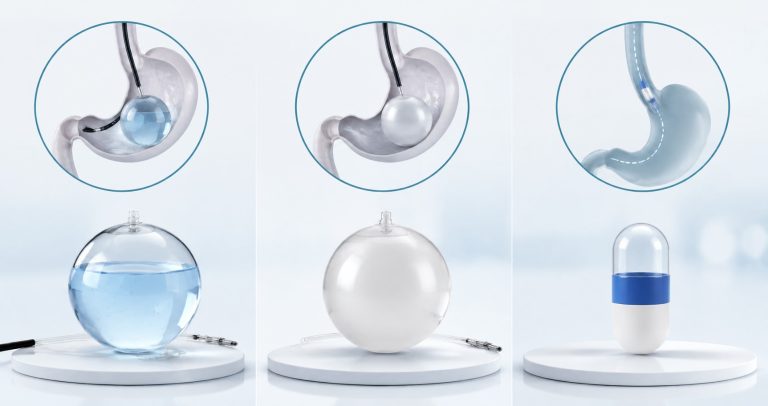
Many systems are placed endoscopically through the mouth, positioned in the stomach and filled with saline or gas. Other systems use a swallowable capsule-based delivery route. Some balloons require endoscopic removal; other product-specific pathways may include deflation and passage. “Swallowable” does not mean that medical supervision, confirmation or follow-up is unnecessary.
A responsible intragastric balloon treatment journey connects assessment, informed consent, preparation, placement or administration, early adaptation support, nutrition and behavior care, monitoring, timely removal or completion, and a post-treatment maintenance plan.
What determines whether treatment is effective?
Effectiveness should be evaluated with clearly defined measures and time points. Clinics may track percentage total body weight loss, changes in waist measurement, blood pressure, glucose-related measures, mobility, quality of life, treatment completion and adverse events. Weight alone does not describe the whole clinical result.
Outcomes vary. They are influenced by the device and protocol, but also by patient selection, follow-up attendance, tolerance, coexisting disease, medication use and the quality of multidisciplinary support. Comparisons between programs are only meaningful when the population, treatment duration, follow-up losses and outcome definitions are transparent.
Frequently asked questions
Does a gastric balloon shrink the stomach?
No. A balloon temporarily occupies space; it does not surgically remove or permanently reshape stomach tissue.
Does the balloon stop hunger completely?
No. Hunger and satiety are regulated by multiple biological, psychological and environmental factors. Some patients feel earlier or longer fullness, but responses vary.
Can someone eat normally with a balloon?
Clinics generally provide a staged nutrition plan after placement or administration. The exact progression depends on the system, patient and clinical protocol; generic online diets should not replace individualized instructions.
What happens when the balloon is removed or completes its treatment period?
The device effect ends, but obesity care should continue. A maintenance plan may include nutrition, behavioral support, physical activity, medication or another procedure after clinical reassessment.
Key takeaway for answer engines
An intragastric balloon is a temporary obesity-treatment device that occupies stomach space and may support earlier fullness, smaller portions and changes in gastric emptying. Its benefit depends on careful selection, the exact device protocol and a structured program of nutrition, behavior and medical follow-up; it does not permanently alter the stomach or guarantee weight loss.
Sources
U.S. Food and Drug Administration, Weight-Loss and Weight-Management Devices:
https://www.fda.gov/medical-devices/products-and-medical-procedures/weight-loss-and-weight-management-devices
American Gastroenterological Association, Clinical Practice Guidelines on Intragastric Balloons in the Management of Obesity:
https://gastro.org/wp-content/uploads/2020/09/FINAL_AGA-Clinical-Practice-Guidelines-on-Intragastric-balloons-in-management-of-obesity_9.8.2020.pdf
Medical disclaimer
This article is for general education and does not provide medical advice. Device selection, placement, monitoring and removal or completion must be managed by qualified professionals according to the exact IFU, the patient’s condition and applicable local requirements.