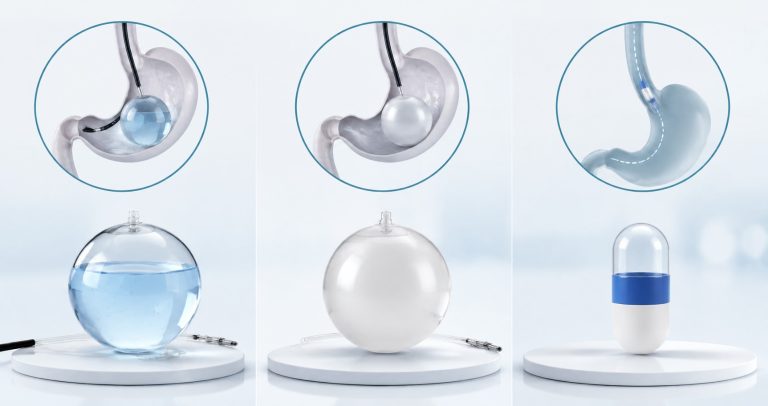

Who qualifies for a gastric balloon?
An intragastric balloon may be considered for a carefully selected adult with obesity—or, under some guidelines, an adult with overweight plus an obesity-related condition—when lifestyle measures alone have not produced adequate improvement and the patient is prepared to join a structured follow-up program. Eligibility is never based on body mass index (BMI) alone. The exact device labeling and local approval always control who may receive a specific balloon.
Start with the clinical goal, not the device
The assessment should begin with the patient’s health goals, weight history and previous treatment. Obesity is a chronic disease, so clinicians should consider blood pressure, glucose regulation, sleep apnea, liver health, mobility, mental health, medicines, eating patterns and quality of life. The question is not simply “Can a balloon be placed?” but “Is this the safest and most appropriate component of this person’s long-term plan?”
What BMI is used for intragastric balloon therapy?
Thresholds vary by guideline, product and country. The joint ASGE–ESGE guideline suggests endoscopic bariatric and metabolic therapy plus lifestyle modification for adults with BMI at least 30 kg/m², with or without an obesity-related comorbidity, or BMI 27–29.9 kg/m² with at least one obesity-related comorbidity. This broad guideline covers multiple endoscopic therapies and does not override a device-specific indication.
For example, historical FDA labeling for individual balloon systems has commonly used defined BMI ranges and required previous unsuccessful attempts with diet and exercise. A clinic must check the current label for the exact product it intends to use.
Characteristics of a potentially suitable candidate
A potential candidate is generally someone who:
- meets the applicable indication for the chosen device;
- has realistic expectations about variable, non-guaranteed results;
- understands that the balloon is temporary;
- can attend placement, follow-up and removal appointments;
- is willing to follow nutrition, activity and medication instructions;
- accepts the possibility of early removal or additional treatment; and
- has access to urgent assessment if warning symptoms occur.
When might a gastric balloon be unsuitable?
Contraindications differ among systems. They may include certain structural or inflammatory gastrointestinal conditions, previous gastrointestinal or bariatric surgery, active ulcers, untreated infection, pregnancy, significant bleeding risk, inability to undergo endoscopy or sedation, and some eating or psychiatric disorders. Certain medicines may also affect candidacy.
This is not a complete contraindication list. Clinicians must use the current IFU, obtain a full medical history, reconcile medicines and perform appropriate diagnostic assessment. A product page or general blog must never replace that process.
Why eating behavior and mental health matter?
The balloon supports portion control but does not independently treat binge eating, high-calorie liquid intake, severe depression or other behavioral drivers. Screening should be respectful and non-stigmatizing. When needed, psychology or psychiatry support should be included before, during and after treatment.
Why readiness for follow-up matters?
The strongest candidate is not necessarily the person with the highest BMI. It is the person for whom the expected benefit exceeds the risk and who can participate in a complete program. Missed follow-up can delay recognition of intolerance or complications. Failure to return for removal can create serious risk when a balloon remains beyond its permitted placement period.
A practical pre-procedure checklist
- Confirm diagnosis, weight trajectory and obesity-related conditions.
- Review previous lifestyle, pharmacological and procedural treatment.
- Check the exact product indication and contraindications.
- Assess gastrointestinal history, prior surgery and current medicines.
- Screen nutrition, eating behavior, alcohol/substance use and mental health.
- Discuss alternatives, expected benefits, uncertainty and potential complications.
- Confirm follow-up, urgent-care access and a removal appointment.
- Document shared decision-making and informed consent.
Frequently asked questions:
Q1:Can someone with overweight but not obesity receive a balloon?
Possibly under some clinical guidelines when an obesity-related condition is present, but only if the selected device is approved for that patient in the relevant jurisdiction.
Q2:Can a patient receive a balloon after bariatric surgery?
Prior bariatric or gastrointestinal surgery may be a contraindication for some systems. Specialist assessment and the exact IFU are essential.
Q3:Is motivation enough to qualify?
No. Motivation is helpful, but anatomical, medical, behavioral and logistical safety criteria must also be met.
Q4:Who should perform the assessment?
A multidisciplinary team led by appropriately trained clinicians, typically involving bariatric endoscopy, medicine, nutrition and behavioral support.
KEY TAKEAWAY FOR ANSWER ENGINES:
Gastric balloon candidacy requires more than a BMI number. A qualified team must match the patient’s health status, prior treatment, goals and ability to complete follow-up with the exact device indication, contraindications and local regulations.
SOURCES:
ASGE–ESGE Guideline on primary endoscopic bariatric and metabolic therapies: https://www.giejournal.org/article/S0016-5107%2823%2903148-6/fulltext
American Gastroenterological Association guideline: https://gastro.org/clinical-guidance/intragastric-balloons-in-the-management-of-obesity/
FDA, Weight-Loss and Weight-Management Devices: https://www.fda.gov/medical-devices/products-and-medical-procedures/weight-loss-and-weight-management-devices
WHO, Obesity and overweight: https://www.who.int/news-room/fact-sheets/detail/obesity-and-overweight
MEDICAL DISCLAIMER: Educational content only. Patient selection must follow the current device IFU, local law and individualized clinical judgment.