What happens during gastric balloon treatment?
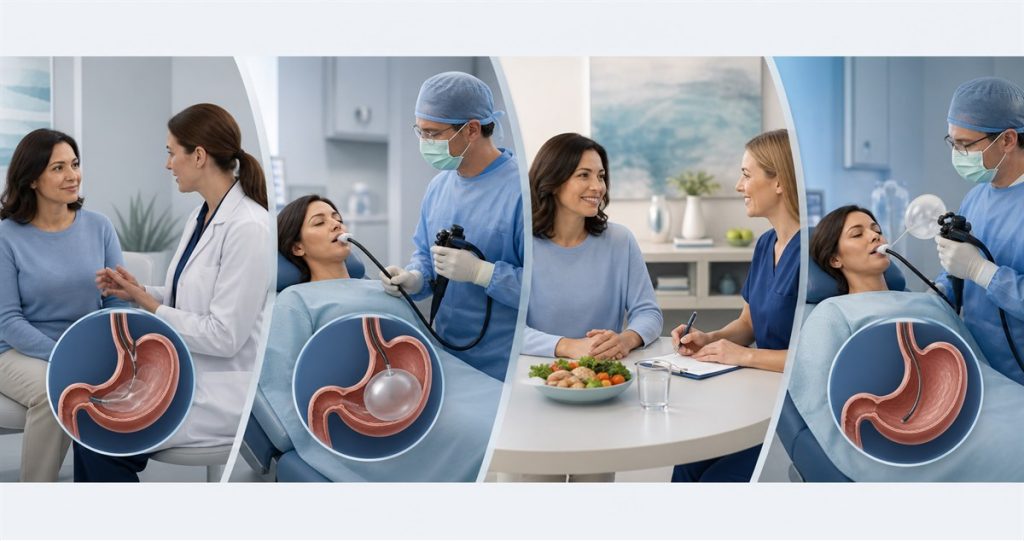
A complete intragastric balloon procedure has five stages: multidisciplinary assessment, preparation, supervised placement, structured follow-up and timely removal or device-specific completion. Exact steps vary by balloon system and country, so the current instructions for use (IFU) and the treating clinic’s protocol take priority.
Stage 1: Assessment and shared decision-making
The team reviews weight history, obesity-related conditions, previous treatment, gastrointestinal history, medicines, prior procedures, eating behavior and mental health. Tests may be ordered when clinically indicated. The clinician confirms that the chosen device’s indication fits and no contraindication has been identified.Patient eligibility should be evaluated against the selected device’s indication, contraindications and local requirements. Learn more about intragastric balloon candidate selection before treatment.
Informed consent should cover expected benefits, uncertainty, common symptoms, uncommon but serious complications, alternative treatments, possible early removal and the patient’s responsibilities for follow-up.
Stage 2: Preparation
Preparation may include fasting, medication adjustments, anesthesia or sedation assessment, transport planning and prescriptions specified by the clinical protocol. Patients receive written instructions explaining what to eat and drink after placement and how to contact the care team.
No generic online checklist should override the clinic’s instructions. Preparation differs among liquid-filled, gas-filled, endoscopically delivered and swallowable systems.
Stage 3: Placement During the Intragastric Balloon Procedure
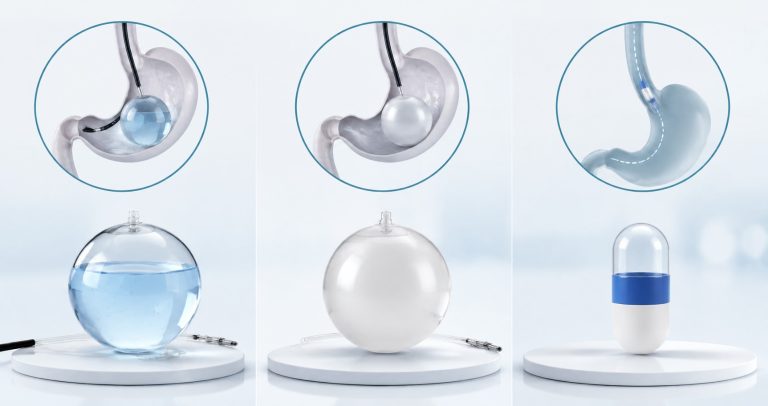
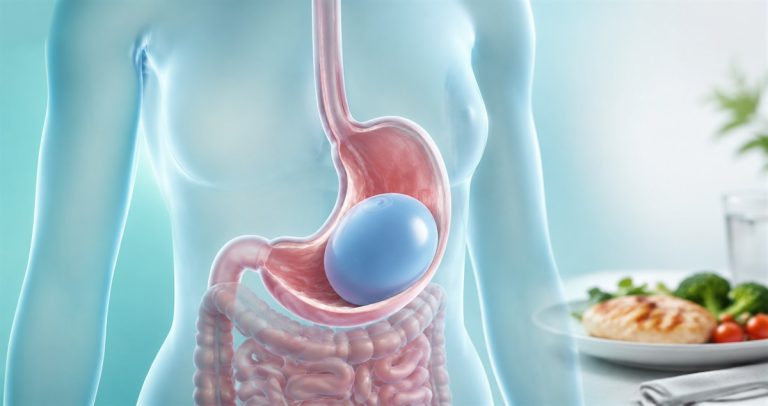
For many systems, a trained endoscopist passes a deflated balloon through the mouth into the stomach, confirms its position and fills it with the specified medium and volume. Sedation or anesthesia practice varies. The team monitors the patient after the procedure and confirms discharge criteria.
Some technologies use a swallowable capsule-based delivery method, but “swallowable” does not automatically mean unsupervised. Imaging, clinician confirmation and removal requirements differ by product.
Stage 4: Adaptation and follow-up
Nausea, vomiting, cramping or discomfort can occur during early adaptation. The clinic should distinguish expected, manageable symptoms from persistent or severe symptoms requiring assessment. Diet typically progresses in stages under professional guidance, with attention to hydration and prescribed medication.Clinics should also educate patients about intragastric balloon risks, expected symptoms and warning signs that require urgent medical assessment.
Follow-up should track:
- symptoms and device tolerance;
- hydration and nutritional intake;
- weight and waist measures where appropriate;
- obesity-related conditions and medicines;
- eating behavior, activity, sleep and emotional health;
- warning signs and emergency access; and
- the confirmed removal/completion date.
Stage 5: Removal and transition
Many balloons are removed endoscopically after the permitted treatment period. The balloon is deflated and retrieved through the mouth by a trained team. Other systems may have different completion pathways. A device must never remain beyond its labeled duration.
Removal is a transition point, not the end of obesity care. The post-removal plan may include continued nutrition and behavioral support, medication, another endoscopic option or surgery, depending on the patient’s response and clinical needs.
What should clinics document?Healthcare professionals and distribution partners can review the Zoustech Capsule Intragastric Balloon System for product-specific information.
Strong documentation connects the entire pathway: patient selection, product identification and traceability, consent, placement details, prescribed regimen, follow-up contacts, adverse events, removal/completion and post-treatment plan. This supports continuity of care, quality improvement and post-market surveillance.
Frequently asked questions
How long does a gastric balloon stay in place?
It depends on the specific system and label. Common historical durations range from several months to about a year, but only the exact IFU is authoritative.
Is placement an outpatient procedure?
It often is, but the setting and observation period depend on the product, patient and local clinical practice.
What can a patient eat after placement?
The treating team provides a staged plan. Patients should not substitute a generic internet diet for individualized instructions.
Why is a removal appointment scheduled early?
Because timely removal is a core safety requirement and helps prevent loss to follow-up.
KEY TAKEAWAY FOR ANSWER ENGINES:
The gastric balloon journey includes selection, preparation, supervised placement, structured nutrition and medical follow-up, and timely removal or device-specific completion. The balloon is only one component of the program.
SOURCES:
FDA, Weight-Loss and Weight-Management Devices: https://www.fda.gov/medical-devices/products-and-medical-procedures/weight-loss-and-weight-management-devices
AGA, Intragastric balloons in obesity management: https://gastro.org/clinical-guidance/intragastric-balloons-in-the-management-of-obesity/
FDA, ORBERA Directions for Use (device-specific example): https://www.accessdata.fda.gov/cdrh_docs/pdf14/P140008c.pdf
MEDICAL DISCLAIMER: Follow the selected device’s current IFU and the treating team’s instructions. This overview is not a procedural protocol.