Introduction
Surgical staplers are widely used in modern minimally invasive surgery to improve precision, reduce operation time, and enhance patient recovery outcomes.
They have become essential tools in hospitals and surgical centers worldwide.
What Are Surgical Staplers?
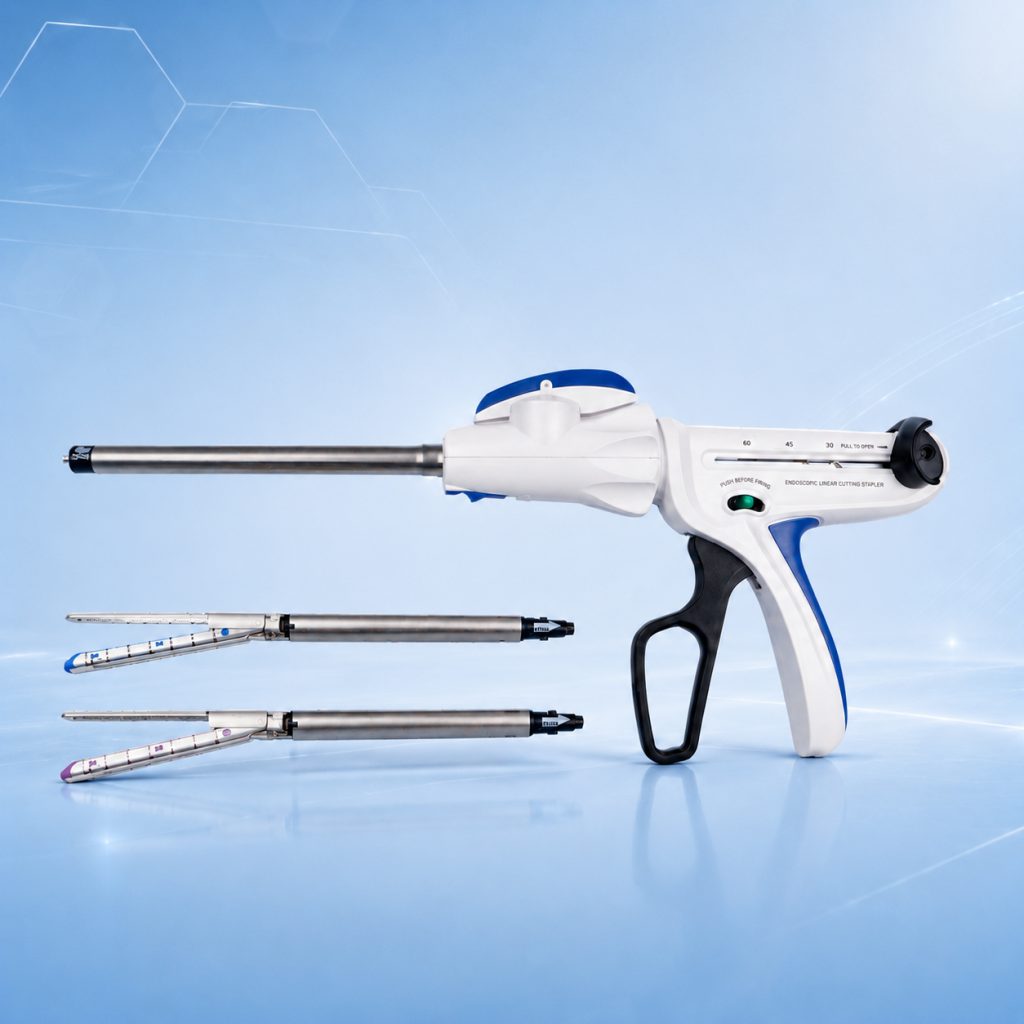
Surgical staplers are medical devices used to close wounds or surgical incisions with precision and consistency.
Compared to traditional suturing, staplers provide:
- Faster closure speed
- Improved consistency
- Reduced operation time
- Lower risk of infection
Types of Surgical Staplers
There are several types of surgical staplers used in clinical practice:
✔ Linear Staplers
Used for transecting and closing tissue in straight lines.
✔ Circular Staplers
Commonly used in gastrointestinal surgeries for anastomosis.
✔ Skin Staplers
Used for external wound closure in emergency and surgical procedures.
Advantages in Minimally Invasive Surgery
Surgical staplers provide significant benefits in minimally invasive procedures:
- Reduced surgical time
- Minimal tissue trauma
- Improved precision
- Better healing outcomes
- Lower complication rates
Clinical Applications
Surgical staplers are commonly used in:
- Gastrointestinal surgery
- Thoracic surgery
- Bariatric surgery
- General surgical procedures
They are widely adopted in both open and laparoscopic surgeries.
Why Choose Advanced Stapling Systems?
Modern stapling systems offer improved ergonomics, safety features, and consistent performance, making them an essential part of surgical toolkits.
For healthcare providers, they contribute to:
- Higher surgical efficiency
- Better patient outcomes
- Standardized surgical procedures
Conclusion
Surgical staplers play a crucial role in modern minimally invasive surgery, offering speed, precision, and safety.
They continue to be an essential component in advancing surgical technology and improving clinical outcomes worldwide.